
BY GIANCARLOS ASENCIO
Fare evasion in the city has long been a major issue for the MTA, but since implementing new fare gates, 20 tested stops have seen a 35% reduction.
As part of the MTA 2025-2029 capital plan, the MTA plans to install modern fare gates at 150 stations. This follows years of dealing with a large toll from fare evasion. In 2025, the MTA lost about $900 million in revenue, and $1 billion in 2024, including both trains and buses, according to PIX 11. As the MTA lost about $1.9 billion over the last two years, it pivoted to installing new fare gates to reduce its losses.
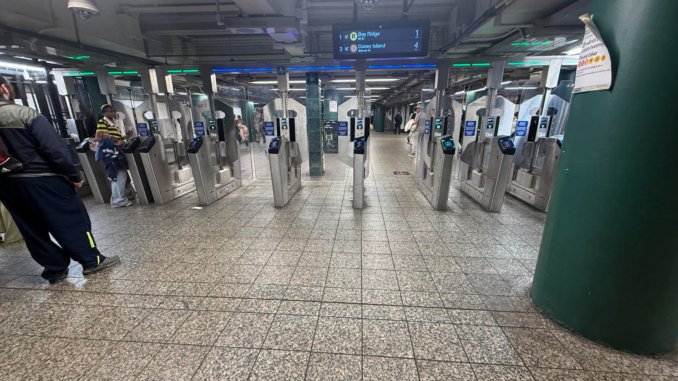
MTA officials and New York Governor Kathy Hochul said the MTA has begun installing modern fare gates at 20 more stations as part of the pilot program. Unlike the original gates, which used a turnstile, these new gates are shaped like a pair of paddle doors, 5.5 feet tall, that open when someone pays their fare and when they leave the station. The new fare gates also have sensors that make a sound whenever someone enters or exits. When someone pays their fare, a green light appears and the doors open wide to let them in, but if someone hasn’t paid and tries to enter, a loud red sensor beeps to signal they haven’t paid. At the Brooklyn Hoyt Street 2 and 3 line and Nostrand A and C line, the MTA saw a 72% reduction, according to amNewYork.
As it currently stands, these new gates seem much harder to bypass and force people to pay the fare. The old fare gates were very successful at letting people evade paying fares by jumping over or going under the turnstiles. Now, it’s very hard to do either.
However, these new gates can only succeed if there are real consequences. Only certain stations have police officers to hand out repercussions for not paying the fare, while people can still evade the fare in stations that either don’t have cops or haven’t had the new fare gates installed yet.
“People have just started to pay the fare instead of going through the hassle to avoid it, but some people are stealing others’ fare in terms of pushing themselves together with the person who paid to get free rides,” said Keanu May, a daily MTA rider. The new gates now require payment, and while there may be no way to avoid them, some stations still allow riders to bend the rules.
The MTA must find ways to limit evasion at stations where it persists because of limited supervision or ongoing remodeling. Still, as its plan moves forward, early progress gives it reason to be optimistic that fare evasion can take a big hit.