
BY EMILY NIXON
Three CUNY campuses aim to have zero to net-zero greenhouse gas emissions by 2047, and a new plan has been created by CUNY experts and consultants to ensure it happens.
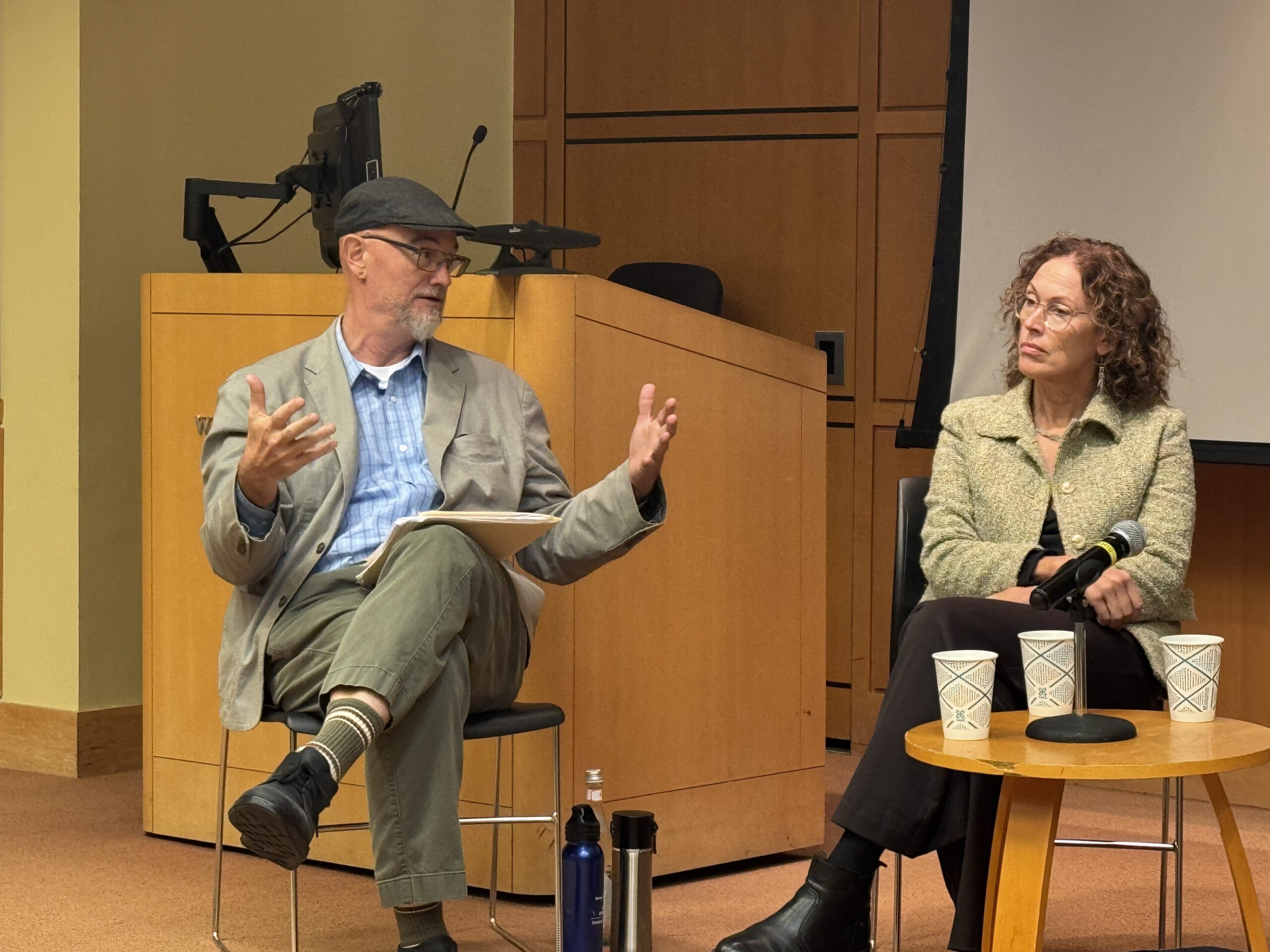
“This is a once-in-a-generation opportunity because upgrading our assets really can only happen every 30 to 40 years,” said Brooklyn College Department of Environmental Health and Safety Director Carrie Sadovnik in a panel announcing the new plan for Brooklyn College (BC) on Oct. 20, 2026, in the College’s Woody Tanger Auditorium.
Brooklyn College, Hunter College, and the City College of New York will be the first to begin renovations for sustainable energy generation, aiming to reduce their climate impact, according to the Decarbonization Leadership Program announced by Governor Kathy Hochul in 2023.
“Brooklyn College, included in the Decarbonization Leadership Program, is one of the dirtiest campuses in the State,” argues Public Power NY, a grassroots organization focused on climate and ending corporate control of power plants, in a position paper.
The plan calls for multiple renovations to change the current heating plant machinery to a system that will extract renewable energy from wastewater instead of fossil fuels. The wastewater will be reused to generate sustainable heat with no carbon footprint, according to Sadovnik. The current machinery is three years past its lifespan, making this a “significant opportunity” to replace it with greener alternatives, she added.
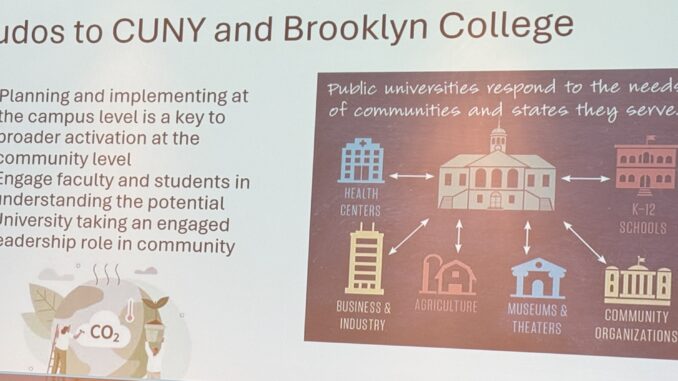
These renovations will happen in real time and present actionable opportunities for CUNY students from various schools of study, such as internships with companies actively working on the renovations or specialized classes offered at BC, according to Michael Menser, an associate professor of Urban Sustainability at BC.
“They call that campus as classroom, campus as a living lab,” said Menser. “We have a program at Brooklyn College that tries to utilize the campus so that students can learn in hands-on ways, and more tangible ways and more impactful ways about how these topics play out with respect to a particular discipline in this place of Brooklyn.”
Ramboll is the consulting company that performed the clean energy feasibility study for Brooklyn College. While the study itself has not been publicly released, multiple sources familiar with its findings stated that wastewater was the most feasible option for Brooklyn College after a geothermal test on the West End Building of BC confirmed that a geothermal electricity source was not an option for the campus.
“Wastewater [is] a predictable heat source for large-scale heat pump systems, especially during winter months, when heating demand peaks and electrical grids are under increased load,” stated Ramboll in a report on Sept. 10, 2026. “The result is a renewable thermal energy source that can materially reduce fossil fuel consumption while largely relying on infrastructure that already exists, with minimal competition of scarce urban space.”
The panel introduced the idea of using a hydronic system, a heating or cooling system that transfers heat through water. This system is an example of a thermal energy network system, which uses natural resources to provide heating and cooling to buildings, a green alternative for traditional fossil fuel-based systems.
This system would collect latent heat from the Metropolitan Transportation Authority station near BC to feed into the campus wastewater heating system, according to Aleksander Gulkewicz, a senior planner at the MTA Construction and Development Department who spoke at the panel.
“The idea is just to use, instead of flowing air, we can flow water through ceiling panels that provide a direct cooling impact to our customers,” said Gulkewicz. “Then, the idea in the long term is to take that heat, capture it, and then provide it to off-takers, provide it to buildings, provide it to campuses, like Brooklyn College.”
This project will also be a greater opportunity for the community around these campuses to research and learn how the implementation of green technology can be a positive step forward, according to Menser.
“People are like, ‘this green energy doesn’t [work]. We don’t need it,’” said Menser. “Having it on our campus is a huge deal. People can come, touch, look at it, and be like, ‘oh, wow, this is a real functioning system that’s actually helping them improve the quality of life in this building that does it without fossil fuels.’”
This project is still in the early phases of implementation, so future effects on campus life and the community at large are still to be seen.