
BY ESTHER BOILEAU
With the midterms a month away, Hands Off NYC is educating voters about election sabotage and ways to prevent it from happening on voting day.
Hands Off NYC is a coalition of over 250 grassroot organizations and individuals that promotes standing up for rights, always using nonviolent resistance to defend democracy. With tensions rising about protecting ballots and voters at the poll sites, Hands Off NYC has been putting in the groundwork by bringing free training and knowledge to voters, so they too can spread the word and protect their vote.
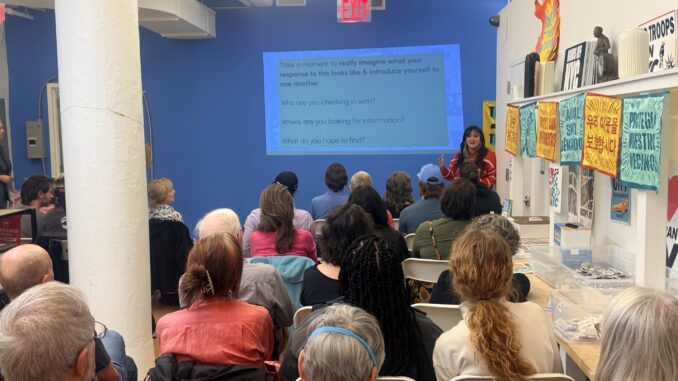
Hannah Strauss, the host of the training and a member of Hands Off NYC, spoke to about 30 trainees in Manhattan. The crowd was mostly older people, along with a few Gen Z voters whom Strauss said she was elated to see. The training was in Manhattan, but it is available to everyone and in all boroughs from the city. Strauss started by reminding the attendees about January 6, 2021 or known to some as Insurrection Day. According to Strauss, the Federal Bureau of Investigation and the Department of Justice have become “stacked with loyalists under Trump’s regime.”
“I ground us in the stakes because the rest of what we’re gonna do is preparing us for how we fight it.” Strauss said.
Strauss explained that election protection and election defense, two phrases that sound the same, are different. Election protection refers to preventing interference with voters’ access and with poll workers’ ability to do their jobs. Election defense means protecting the legitimacy of the election system itself. The evening’s program focused on the defense side and making sure the legitimacy of the vote is protected.
Held in Hands Off’s Chelsea office the training proceeded with trainees put into groups and to role play various scenarios. For example, what news sites should people turn to in a situation like January 6, and what should people expect from the government in such a situation? Many attendees suggested looking for information on Reddit, Al Jazeera and other prominent sites, while some thought such a situation would call for a general strike.
The next activity was a hassle line, a role-playing tactic used in nonviolent training.
Split into two parallel lines, the group practiced both effective ways to resist and techniques for escalating situations during a time of unrest. Some of the examples included standing in front of two people and disarming them, humanizing the person, singing and probably the most important one, filming the situation. These tactics and training use real life emotions to develop the skills needed, that if encountered can be dealt with.
“You know I knew all these things, but hearing her was really good,” said a participant who wished to not be named. “You know it’s easy to become complacent if you’re not kind of being reminded all the time how urgent and important this is. So it helped me, I feel much more motivated, even though I knew about it.”
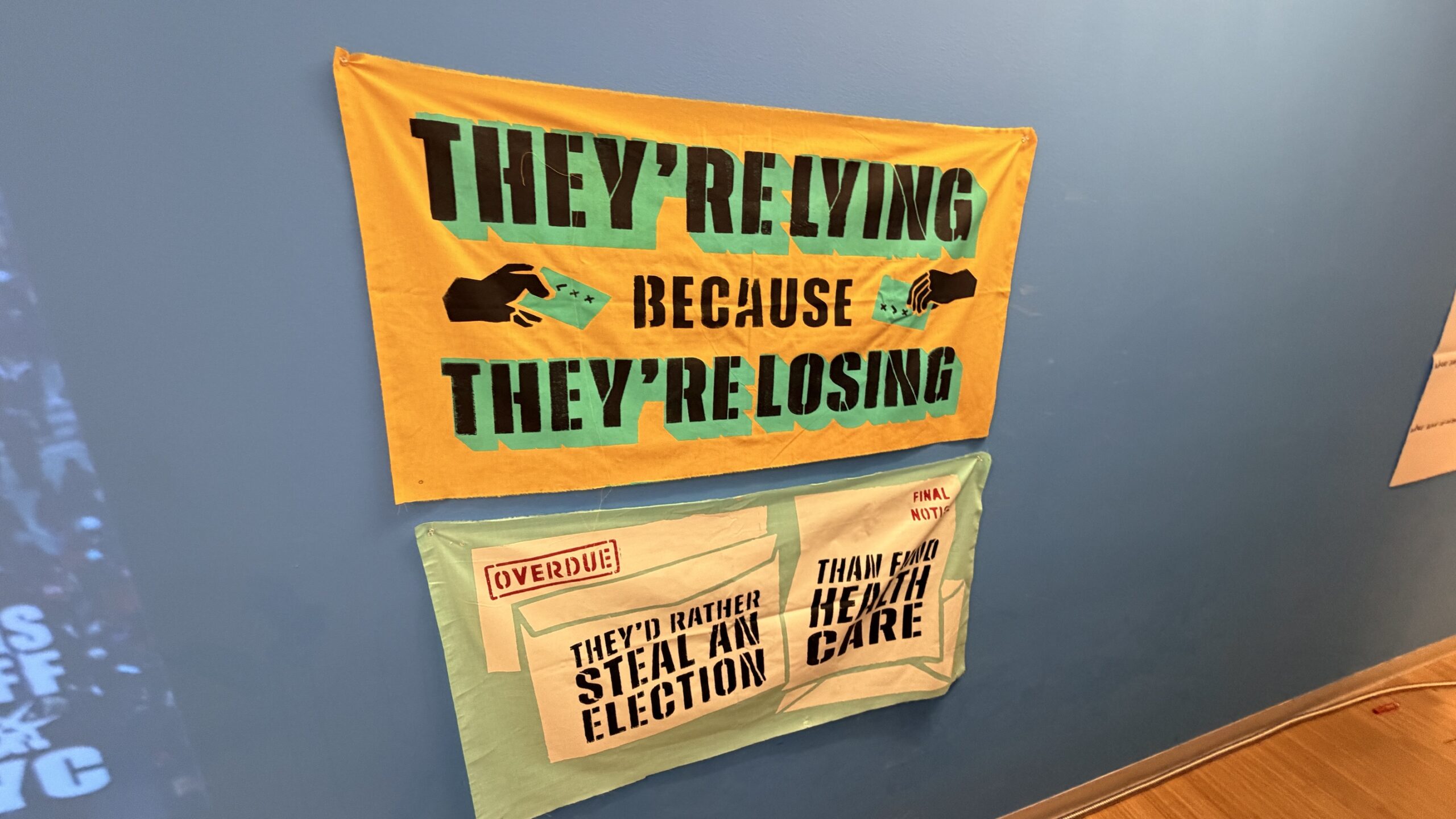
A second instructor, who chose to not be named, explained the trick to rallying voters and getting them to the poll sites: “Be realistic, present the facts, and always have hope.”
The two instructors gave two qr codes, one with more information about rallies and upcoming protests and the other was a group chat that any and every person could chime in and meet with others under the same umbrella.
“When you choose not to vote if you’re not on the table you’re on the menu,” the second instructor said.