
BY: BARBARE AKHALKATSI
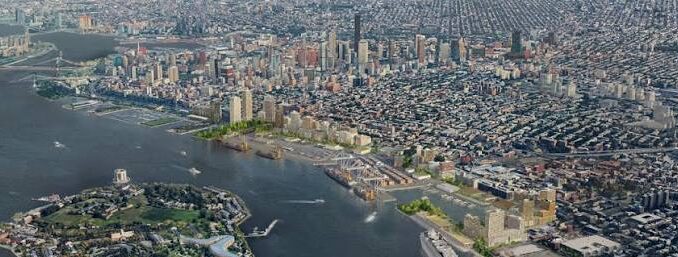
As the $3.5 billion vision plan combining an all-electric, 60-acre port with a mixed-use waterfront community in Red Hook marked its year anniversary, Carroll Gardens Association hosted a community forum regarding the future of the Brooklyn Marine Terminal.
The attending maritime professionals encouraged residents to put freight transportation at the top of the Brooklyn Marine Terminal’s redevelopment priorities, arguing that moving more goods by water could reduce truck traffic, improve air quality and support waterfront jobs.
Among attendees at Sacred Hearts Church, held on Sept. 28, was a special guest – Congresswoman Nydia Velázquez. “The future of New York is on the water,” Velázquez told the enthusiastic gathering, “The community fought for the process to be transparent, now it’s on us to address the issues.”
“It’s a bridge VS real estate,” said Phaedra Thomas, a Brooklyn industrial expert and former executive director of the Southwest Brooklyn Industrial Development Corporation. Having spent 10 years of her career in Sunset Park, she argued that the Brooklyn Marine Terminal should mainly be understood as transportation infrastructure.
Jim Tampakis, founder of Marine Spares International and a loangtime Red Hook maritime business owner, proposed a waterborne freight and transportation combined distribution system. According to his plan, goods would arrive at the terminal, be sorted into containers and travel by electric vessels to waterfront sites in the city. Tampakis also proposed to have solar panels on terminal buildings to help power operations.
The stated vision of the New York City Economic Development Corporation, which is overseeing the re-development of the port, includes using the terminal as a major hub in its Blue Highways network. The network aims to move freight by water and reduce reliance on trucks. The representatives from the New York City Economic Development Corporation attended the forum as well.
“The EDC isn’t the enemy, they just got their priorities wrong,” said Geoff Utmark, a naval architect and maritime entrepreneur, who questioned the priorities guiding the terminal’s redevelopment.
Furthermore, Phaedra Thomas said, “There’re some amazing people at EDC that have brought real life maritime facilities and new investments in Sunset Park, the Navy Yard, Hunts Point, and all along our highway since the containerization happened. That is the maritime resurgence we want to see. I don’t want you to think that anything has died back. It has actually grown in the face of little to no support.”
“We are in the epicentre of the biggest consumer market on the planet, and that is a fact,” she added.
Thomas argued that bringing more goods into Brooklyn by water could shorten truck journeys and help reduce pollution affecting nearby communities. She also called for longer-term stability for the existing port operations and a broader planning effort to reach the terminal’s full potential. She argued that the port’s future should be planned so it serves the city’s transportation needs, supports union workers and reduces the environmental issues in the neighborhood.
“Let’s put our thinking caps on and make New York City number one, because we are.”