
BY JAIDA DENT
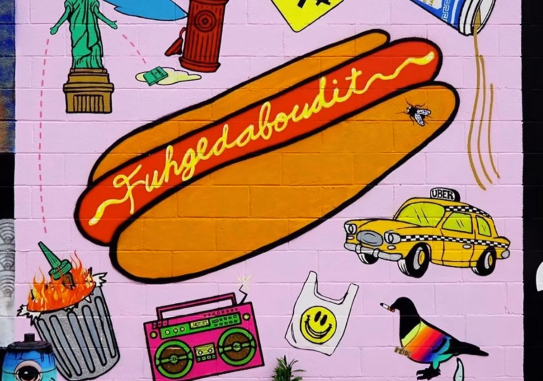
It’s rare to walk around New York City and not see art around you, whether on walls, buildings, or even the sidewalks. But an art form that was once considered vandalism is now accepted and often needed more than ever. One community project in Queens has changed the narrative about graffiti, murals, and what it means to be a “street artist.”
“I am on a mission at Welling Court to give these types of artists a safe place to be respected with their skills and to show it to various communities in a way that they could be approached and talk to each other, to the community, to their friends, and be proud of what they have accomplished,” said Alison Wallis, the owner, director, and curator of the Welling Court Mural Project.
The Welling Court Mural Project was born out of an idea for beautification. Astoria residents Jonathan and Georgina Ellis reached out to Wallis in the summer of 2009 to bring art to the plain cinderblock walls that surrounded their community.
“After running an art gallery in a community full of subversive art forms that many people did not understand nor appreciate, a large part of my job was educating people as to the beauty and the background to the artists that created it, and their experiences that they had that influenced them to be in this art form that they were seeing,” said Wallis.
Each mural is created out of a relationship between Wallis, the building owner, and the artist that best fits the needs of the project. Some owners have an expectation for the artwork they want, and it’s up to Wallis to find an artist who can bring the vision to life. She uses artists that she has worked with before, but also has artists on a waiting list who are interested in being a part of the project.
The WCMP has seen a variety of art and artists, with over 200 collaborators listed on its website. Pinky Weber, a muralist from Los Angeles, California, was able to paint her first solo piece with the WCMP.
“Mural art is powerful because it belongs to everyone. It changes neighborhoods, boosts small businesses, and makes cities more joyful and human,” said Weber. “Projects like WC reserve the heart of street art — community, collaboration, and creativity without elitism. I love being part of movements that make art accessible, uplifting, and fun.”
Beyond the act of creating an artful and lively community, murals and street art have a long history. Mike Hughes, a graffiti artist from Washington Heights, understands the history of graffiti because he lived through it. A contributor to the book and movie “Wall Writers: Graffiti in its Innocence” by Roger Gastman, both iterations detail the lives of graffiti artists and the history of graffiti in 1960s and 1970s NYC.
What we understand as graffiti comes from a history of “tagging”, the act of an artist writing their name. Hughes viewed the act of tagging as “leaving a mark behind” and “the city is for us to leave our names.” However, a creative and playful act by teenagers turned into a city-wide attack on all artists. According to an article from the Guardian in March 1973, Mayor John Lindsay spent $10 million to clean up the graffiti from city walls and public transportation.
The views on graffiti were divided. “Some of them feel it is healthy for the youngsters to assert themselves by writing their names all over everything; others say it’s aggressive, anti-social, destructive — and ugly,” stated the Guardian.
While tagging and graffiti are cool, a key part that many don’t realize is respect. Respect for the artwork that is placed on the walls and respect for the artists of the community.
“Graffiti is very much based on respect within their world of artistry. If you don’t know your history, and some newbie toy comes over and paints over a legend’s piece, people notice,” said Wallis. “People recognize and get angry. If you put yourself up in the street and you’ve dissed some founder or some recognized, notable person, expect to get your stuff trashed because you disrespected the elders.”
Today, the work of murals is the most accessible way to interact with the arts. The WCMP has grown because of the responses from the community in wanting more art and artists wanting to paint. The community is changed by the fresh art coming in, and the artists grow by being allowed to have their work showcased.
“Street art can be very powerful when it comes to helping support people who feel isolated or who feel lost or who are looking for answers,” said Wallis. “Colors, shapes, and imagery help to unconsciously unlock parts of themselves that are seeking an answer for truth, or for love, or for change, or for support. Street art is a powerful tool of transformation, envisioning what a peaceful, beautiful future can be.”