
BY RIVER FLEISCHNER
A new program to provide free pet food has begun at select food banks across New York City. The city funded program, a collaboration between the Mayor’s Office of Animal Welfare (MOAW) and the NYC Department of Social Services (DSS), was announced by Mayor Zohran Mamdani on Oct. 15. According to a statement by the Mayor’s office, $500,000 has been allocated for the program, to be split between 22 different city-funded food banks.
While the Mayor’s office lauded the move as “strengthening the City’s safety net for animals,” others expressed doubts about the long term efficacy of the initiative.
“Demand is high,” said Walter Brackett, the assistant director of food programs at New York Common Pantry, of pet food provided by the initiative. One of the participating food programs, New York Common Pantry, has locations in Manhattan and the Bronx. Brackett said that his program’s share, about $30,000, has already been spent, with deliveries spaced out to last till the end of the year.
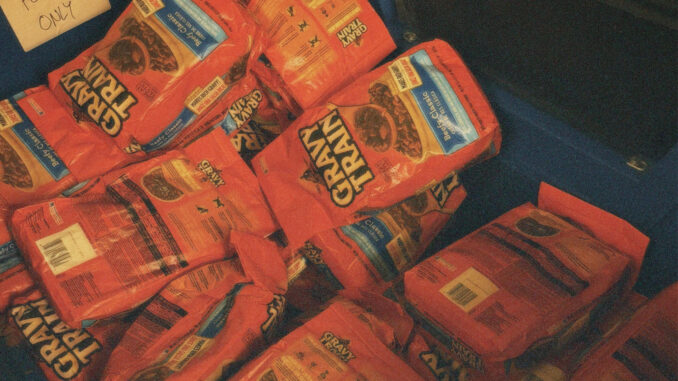
A towering mass of dog food boxes hulked in the corner of the bustling staging area of New York Common Pantry, as Creedence Clearwater Revival howled from a hidden speaker as volunteers busily prepared food to be given to the program’s participants and Brackett gestured to the stack of dog and cat food, explaining the popularity of the new program.
According to the city’s website, New York City is home to an estimated 8.58 million people and 1.1 million pets. About 50% of New Yorkers own a pet, according to Hudson Animal Hospital. Brackett said this average is also true for patrons of New York Common Pantry, where he says about ten to 20 new guests have signed up each week specifically for pet food since the program began.
“The affordability crisis affects every member of a family, including the pets we love,” said Mamdani in the official statement. The statement also claimed the initiative would save families from surrendering their animals to shelters.
There were 44,381 animals in shelters throughout the city last year, according to the city Comptroller. Of those,18,293 were given up by their owners. Brackett says not just access to pet food, but also housing reform and better access to human food could lower that number. When people are struggling to pay their rent and feed themselves, he explained, they cut corners. “People switch brands, they buy less nutritious pet food, which leads to higher vet bills,” he said, which leads to more people giving up their pets.
“When money gets tight, we know people will skip their own meals before letting their animals go hungry,” said DSS Commissioner Erin Dalton in the Mayor’s statement. Brackett has seen this in person. “It’s absolutely heartbreaking when you see a 75-year-old woman coming in going, ‘hey I know I’m only supposed to get two cans of tuna, but can I switch this rice for tuna?’” he said.
“How much money can you throw at a problem? I’d say it’s a limitless number,” said Brackett.
He said while many patrons are thankful for the new program, some are also cynical. “A lot of people are beaten down by the world these days. They’re like ‘oh, it was nice, but how long does that last?’”
Brackett said he hoped for a new round of funding in the new year.
“When you take away the pet food, you’re gonna get more people giving up their pets,” he said.
“It saves people from skipping meals, because they’re getting tuna or something, and giving it to their pet,”