
By NICHOLAS GUMBS
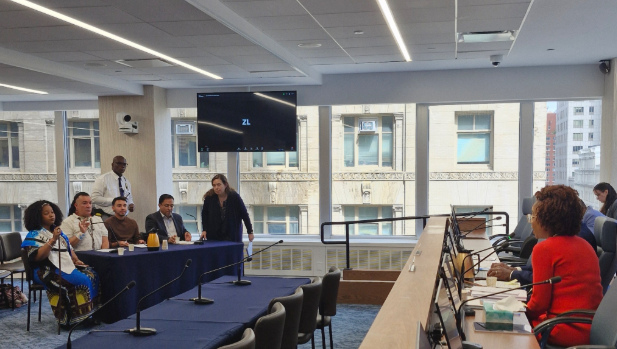
Advocates, attorneys and formerly incarcerated New Yorkers pressed city officials over mental health care and conditions at Rikers Island during a September 23 City Council Committee on Criminal Justice hearing. Council members examined legislation addressing medical care, children visiting jails and protections for transgender people.
Darren Mack, co-director of Freedom Agenda and a former Rikers inmate, testified that more than 1,500 people at Rikers have been diagnosed with serious mental illness, a figure he said has increased 83% since 2022. “There’s no one solution to address this,” Mack said, calling on the city to divert more people from jail and invest in community-based treatment.
The committee considered Intro 809, sponsored by Chair Selvena Brooks-Powers, which would require the Department of Correction and Correctional Health Services to develop procedures for medical appointments during and after lock-ins. Missed appointments would be prioritized based on medical necessity.
Witnesses questioned current correctional department practices. Zachary Katzenelson of the Independent Rikers Commission criticized the department’s response to “deadlocking,” in other words a practice of isolating inmates. “There’s no new training. There’s no new inspections.” He said joint crisis-intervention training between correction and health staff had “completely fallen apart.”
Transgender housing and safety were also discussed. Testimony presented by Brooklyn Defender Services included an account from a formerly incarcerated transgender woman who described sexual assault and violence at Rikers. “We had no type of protection whatsoever,” she said. Advocates supported extending the task force addressing transgender and gender-nonconforming people through Intro 133 while calling for stronger protections.
Intro 453, meanwhile, would establish mental health services and referrals for jail visitors under 18. Some witnesses questioned DOC’s role. “Care should be provided by trained mental health professionals through trusted community-based organizations, not by the Department of Correction,” Miriam Goodman of the Women’s Prison Association testified.