
By Eddy Prince
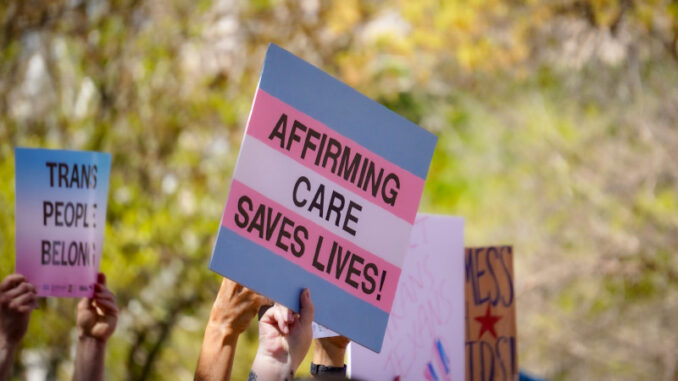
Three NYC Council committees called on the New York State Legislature, as well as the governor, to establish more accessible gender-affirming care for LGBTQI+ people in the state. On September 23, the New York City Council Committee on Hospitals held a joint meeting with the NYCC Committee on Mental Health and Substance Use, as well as the NYCC Committee on Women and Gender Equity, to discuss access to gender-affirming care and the associated mental health outcomes for transgender and nonbinary youth.
“It’s no secret that transgender and nonbinary New Yorkers have recently faced a barrage of threats, challenges, and intimidation from the federal government,” said Tiffany Cabán, Chairperson of the Committee on Mental Health and Substance Use. Gender-affirming care “is strongly associated with improved mental health outcomes for transgender and nonbinary people,” she said.
Cabán has introduced and passed legislation to support survivors of gender-based violence, protect abortion care in NYC, and move homeless New Yorkers more efficiently to permanent homes.“Transgender and nonbinary youth especially are disproportionately burdened by poor mental health outcomes driven by reduced social support,” said Cabán. “Research consistently shows that access to gender-affirming interventions is associated with roughly 60% lower odds of moderate to severe depression, and over 70% lower odds of suicidality in youth.”
In the wildly divisive US political landscape, gender and LGBTQ+ issues are hotly debated by both parties. Political figures are making highly publicized remarks on trans issues, like Alabama Senator Tommy Tuberville stating that “This gender confused mental illness is on the rise in our society today,” while standing next to a sign reading “Transgenderism is a mental disease”. According to the Gay and Lesbian Alliance Against Defamation, ‘Transgenderism’ is a term used since the 1990s to classify transgender identity as a political ideology.
“Supporting transgender and non-binary youth means defending their right to healthcare,” said Amanda Farías, Chair of the Committee of Women and Gender Equity. “An analysis by the Human Rights Campaign found that 27 states, plus Puerto Rico, have successfully passed bans on gender-affirming care for transgender and nonbinary youth, affecting 48% of transgender youth nationwide.” The proposed bill sought to require the Department of Health and Mental Hygiene (DOHMH) to create resources related to the unique health care needs of LGBTQI+ individuals.
Andy Bowen, the founder and Executive Director of Queer Budget Center, spoke on behalf of their organization in support of Cabán’s resolution. “The governor must follow the example of the city council and the mayor in making historic investments in gender-affirming care. The community is suffering and waiting,” they said. “I cannot echo hard enough, also, the need to expand gender-affirming care for all ages, and that care needs to be widely geographically accessible.”
Filament Kind , a spokesperson for the New York Transgender Advocacy Group, shared their experience with gender-affirming care, as well as their declining mental health. For years, Kind felt trapped in their own mind and their own skin. “Six years ago, I was hospitalized after coming very close to ending my own life and engaging in self-injurious behaviors,” shared Kind. What they really needed was a medical transition.
“Gender-affirming care is suicide prevention,” said Kind. “This information is primarily spread by word-of-mouth, creating gaps in access to this crucial healthcare for those who don’t have such community or connections yet. [The proposed bill] could create, for many people, access to healthcare that could save lives.”