
BY: BARBARE AKHALKATSI
Following up on the South of Prospect development plan workshop held on Sept 14., Community Board 14 and Prospect Park Alliance members gathered with residents to discuss the future steps of the neighborhood plan.
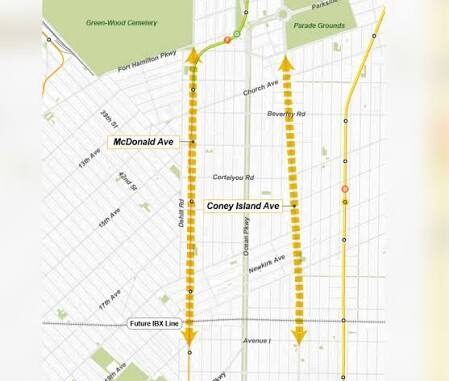
At the Oct. 27 meeting, the board’s Community Environment, Cultural Affairs and Economic Development Committee focused on the plan supporting existing businesses, creating accessible public space and improving infrastructure on Coney Island and McDonald avenues.
As a part of the future envisioning activity, the board discussed what would the success of the plan look like in 15 years. During the discussion about cultural affairs, tension arose between neighborhood preservation and neighborhood expansion.
“They want to build an apartment building on every corner and change the character of the neighborhood – we want to preserve the character of this neighborhood. We are the history,” one of the residents said, “Something about the layout of our neighborhood contributes greatly to the creation of communities.”
Moreover, another participant highlighted the cultural importance of the area. “Specific to the Coney Island corridor, there are tremendous variety of cultural institutions, we have Yeshiva Flatbush, a number of mosques, food from everywhere.” Said Nina Sabghir, a Community Board 14 member, “You could eat at a different nationality every night of the week.”
While identifying the corridors’ restaurants and cultural institutions as assets worth preserving, participants also raised concerns about storefront vacancies and the potential displacement of existing small businesses, which would essentially harm the initial plan to keep the economy local. They encouraged Department of Small Business Services to speak with the business owners as a part of their responsibilities.
“I think we’d all agree that our businesses are struggling,” said Nina Sabghir, “As economic development is in our mandate, it’s worth mentioning that I see vacancies more apparent here than in other places in Brooklyn.”
Participants also mentioned a shortage of affordable indoor gathering places, parks and usable green space, specifically for kids and senior citizens. “Part of the goal is to is make sure the community and the city are aware of the park’s capital needs and operating needs, which are severely underfunded,” said Deborah Kirshner from Prospect Park Alliance, “We have $500 million of capital needs.”
As the community gathering space also emerged as a major concern, one of the participants remembered their neighborhood association paying $650 to rent a business for an annual meeting attended by about 45 people. “We have a real lack of community gathering spaces,” he said.
Other concerns included flooding, litter, poor lighting, parking and transportation issues. The meeting ended with agreement that committee chairs would circle back to the neighborhood plan priorities for further review.