
BY EDDY PRINCE
A bill to honor African-American burial sites has finally moved forward after nine months in limbo, following a New York City Council committee meeting.
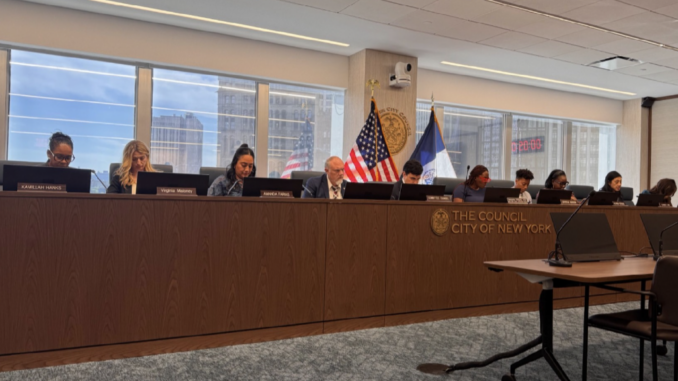
On September 9th, 2026, The New York City Council Committee on Cultural Affairs, Libraries, and International Relations unanimously voted to activate a new bill to amend the NYC
administrative code on how to properly identify historical African-American burial sites. “New York cannot tell its complete story while the resting places of people remain unseen,” said
Councilmember Kamillah Hanks. Hanks, a Staten Island resident who focuses on youth-driven community outreach, is the primary sponsor of the bill. “Their lives deserve dignity, their resting places deserve protection, and their descendants deserve to know why their history matters.”

The Department of Records and Information Services (DORIS) will now be required to provide a report to the public about these burial sites. This report would need to include a list of all known burial sites historically associated with formerly enslaved persons or historically African- American communities citywide, along with certain information about each site. This bill was initially introduced by Hanks on January 29th, 2026.
Hanks’ proposed bill also aims to identify additional historical African-American burial sites. “[This bill] gives the city a responsibility to locate, document, protect, and recognize the sites,” said Hanks. Each site on the proposed list would also include a description of any historical significance of each burial site, a description of the physical condition of each burial site, and who has jurisdiction or ownership over burial sites located on certain property types, such as a burial site on private property. The report would also include a plan to locate any currently unmarked historical African-American burial sites citywide. “This is quite a relevant piece of legislation,” said Dr. Nantasha Williams, Chairperson of the Committee of Cultural Affairs. “There is an active situation happening in Queens, where one of these burial sites was just paved over.” In Elmhurst, Queens, a private owner knowingly paved over their property to use as a parking lot after the remains were discovered. The initial plan by the owner was to develop condos on the property, but when the remains were discovered, the owner instead bulldozed the property, which law enforcement later deemed illegal and ordered the oner to shut down the lot by November 30th, 2026.
The bill would also include recommendations for the preservation or commemoration of the burial sites as well as recommendations for sources of potential resources or support to preserve the sites, including from state or federal historic preservation programs. This has been done in the past, with the African Burial Ground National Monument located near City Hall in Manhattan. In 1991, while excavating for a federal office building, construction workers found “human burials,” and many African descendants and community members banded together to ensure the site was properly honored. The remains were carefully studied and reinterred near the property, and a memorial now exists at the original location.

“This bill is not the end,” said Hanks. “We will continue this work until every part of our history is seen, honored, and never forgotten.”