
BY JAIDA DENT
New York City is bursting with creativity. But for Queens, the issue isn’t a lack of talent, but rather a lack of connection. One institution, the Flushing Town Hall, works to provide a remedy for the entire borough and create relationships between cultural institutions.
“Queens is so amazing. I’ve lived here for a really long time, but what it is missing that other boroughs have, and I’m thinking mostly of Manhattan and Brooklyn, is a really robust network where we have a lot of talent, but not necessarily the network,” said KC Trommer, the director of marketing and community engagement. “So what Flushing Town Hall does as an arts council is really trying to connect the artists to each other and to the resources that are available.”
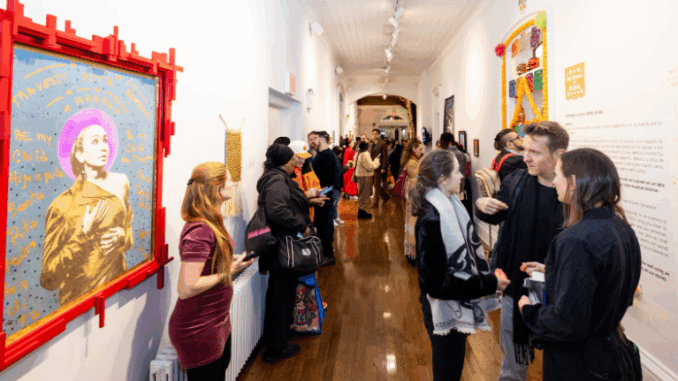
The FTH is a multidisciplinary arts center and hosts an array of programming and events, but its mission is more than just working for itself; rather, it aims to build and uplift Queens.
“FTH is so many things: an arts council for Queens that supports the borough’s many talented artists, an education center with a range of school shows and cultural opportunities for kids and their families, a world-class performance space with amazing programming, and a cultural hub for Queens and greater NYC,” said Trommer.
This cultural hub seeks to unite the borough and build its own network that benefits both organizations and community members. The Queens Cultural Mapping Initiative is a project started by FTH that connects other art facilities within the borough to one another and hosts all of their information in a digital database for the public to view and utilize.
“The project was inspired by a desire to better understand who is doing cultural work in Queens, what they need, and how we as an institution can better support them,” said Natalie Bedon, the project manager for the Queens Cultural Mapping Initiative. “Queens is one of the most diverse places in the world, yet many artists and organizations operate independently, with little visibility or connection to each other.”
The initiatives promote collaboration between the organizations represented, as well as addressing the needs of the community. One-on-one interviews, town halls, and artist interviews were used to help inform the project.
According to the initiative’s executive summary, a benefit of these organizations is how much they showcase culture and heritage in their respective communities. However, these groups are hindered by the geographical makeup of Queens, with inconsistent transportation throughout the borough, and the lack of guidance from a borough-wide arts council, as the Queens Council on the Arts has quietly “transitioned from its traditional role in 2022.” This has resulted in smaller groups working harder to support the entire borough.
“Collaborating with organizations has been incredibly rewarding. Many groups serve as cultural hubs for their communities,” said Bedon. “Spotlighting their work and giving them a platform has strengthened relationships across the borough and shown just how vibrant and interconnected Queens culture truly is.”
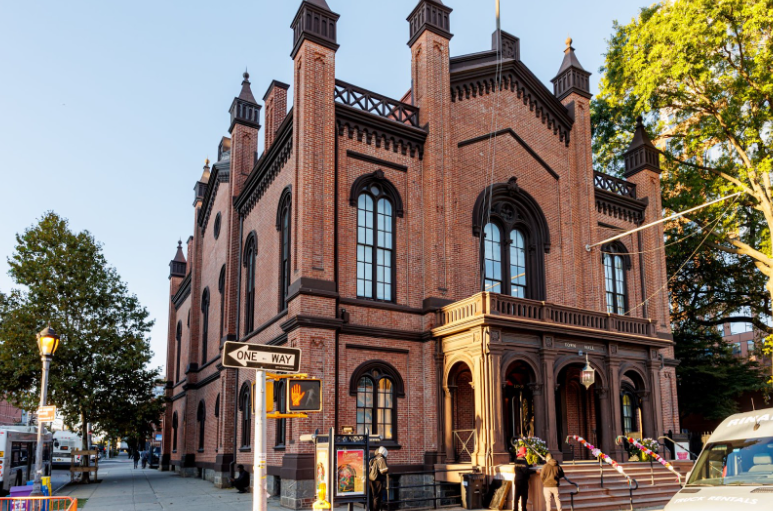
Before its current role as a cultural and artistic space, FTH held a long history that had deviated from the arts. The building opened in January of 1864 as a town hall, but after Queens became part of New York City in 1898, the city took over the building, and it functioned as a courthouse and jail until 1960. Then the building was abandoned. As part of an effort to restore it, the National Park Service deemed it a historic site in 1972. The building reopened as FTH in 1990. As an arts institution, FTH earned many honors, including becoming a member of the New York City Department of Cultural Affairs’ (DCLA) Cultural Institutions Group (CIG) in the late 1990s, as well as a Smithsonian Institute affiliate in 2004.
Today, FTH covers a variety of arts experiences for visitors, including live performances like Monthly Jazz Jam and exhibitions, along with partnering with DOE schools to provide workshops for students.
But beyond being an arts institution, FTH gives back to the community through providing grants to enhance the neighborhood’s cultural climate, including the Queens Community Arts Grant and the GO Queens Grant for non-profit organizations, and the Artists in Queens Grant.
The FTH also provides space grants for artists to use the facility and opportunities to connect and receive guidance from FTH staff in Artist Professional Development Conversations and Friday Zoom Artist Hang events.
Trommer has received a city grant to fund her work on the literary project QUEENSBOUND and understands the impact a grant can have on an artist.
“Getting that grant money was for my own personal writing and then for my project, really important to feel not only supported, but to make it possible for me to do programming that brought in people,” said Trommer.